


Relying on traditional SEO in 2026 is financial suicide. If you think buying cheap backlinks will keep you relevant, you are completely dead. Users now demand instant answers directly from AI search engines. You must engineer your digital assets purely for machine readability. Stop playing by the old rules to survive.
At their absolute core, AI search engines are aggressive, highly advanced software systems that completely bypass the traditional link-clicking experience. Instead of forcing a user to dig through a dozen messy websites, these engines instantly pull massive amounts of raw web data, synthesize the information in real-time, and spit out a highly accurate, conversational answer directly on the screen. They process context, intent, and complex variables instantly.
You have to stop treating these new platforms like standard web crawlers. Grasping the important insight about AI search engines is the only way you avoid watching your organic traffic drop to absolute zero.
Users are no longer visiting websites for basic information. AI systems instantly resolve queries directly on the search page. If your entire business model relies on ad revenue generated from people clicking to read simple definitions, your business is already dead. You must pivot strictly to high-intent, complex commercial queries where buyers actually need deep comparisons before making a massive purchase.
Language models do not care about your organic rank. They care entirely about extractable facts. Your massive goal is no longer fighting for the number one slot on a traditional results page. You are fighting to become the primary cited source when an AI generates a customized response.
Spinning old articles using cheap writing tools is financial suicide. AI engines violently filter out generic, low-effort pages. They specifically hunt for unique data sets, original expert opinions, and deep structural formatting. If your page does not offer completely original, hard data that the AI cannot find anywhere else, you will be permanently ghosted by the algorithm.
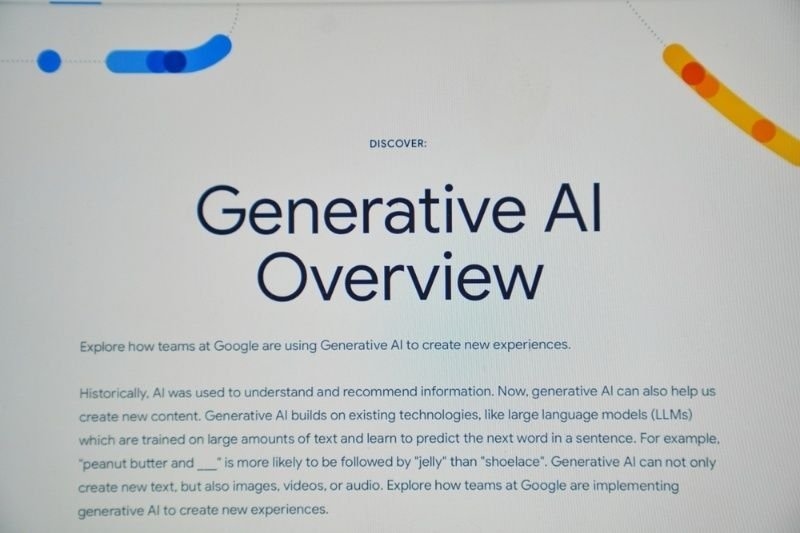
Google is not abandoning its search dominance; it is violently adapting. If you do not understand the mechanics behind the Google AI overview, you will lose your most valuable digital real estate overnight.
Google does not just pull an answer from a single high-ranking blog post. The system aggressively crawls dozens of top-tier pages simultaneously, rips out the exact facts it needs, and weaves them into a single, comprehensive response at the top of the page. If your content contradicts established data or lacks hard evidence, the model completely ignores you.
The engine does not fire an AI summary for every single query. It completely skips basic navigational searches like pulling up a login screen. It aggressively activates when users ask highly complex, multi-step questions that usually require opening five different tabs.
Google relies heavily on its massive internal database of established facts and entities. If your brand is not clearly defined through aggressive schema markup, the AI has no idea who you are or what you do. You must use clean, machine-readable code to explicitly tell the system exactly how your products connect to the broader digital ecosystem.
Top Pick: How AI Browsers Are Transforming Everyday Internet Searches?
You cannot bolt a few new keywords onto your old blog posts and expect to win. You have to aggressively restructure your entire content strategy to conquer generative search.
Stop burying the main point under five paragraphs of useless fluff. Generative AI models are incredibly impatient. You must state the absolute hardest fact, the exact price, or the direct answer in the very first sentence of your section.
Language models completely ignore generic opinions. They actively hunt for raw numbers, unique case studies, and original datasets. If you run a custom survey or publish a massive industry report with hard statistics, AI systems will repeatedly cite your brand as the primary authority.
Publishing one random article about a topic does absolutely nothing. You have to build an aggressive, heavily interlinked cluster of content that covers every single micro-question a buyer could possibly ask.
The metrics that dictate success have completely mutated. Here are the exact AI ranking factors you must ruthlessly optimize for right now.
If your website loads slowly or features messy, broken code, the AI crawler simply drops you and moves to your competitor. You must deploy aggressive schema markup, clean heading structures, and lightning-fast server responses. You are no longer designing pages just for human eyes; you are building highly structured databases that a machine can parse in milliseconds.
An AI engine will not trust your claims just because you published them on your own domain. It aggressively cross-references your brand across high-authority platforms like Reddit, massive industry forums, and digital PR mentions. You have to force your brand into these external conversations.
Generative engines absolutely despise outdated information. A post you wrote three years ago is completely dead to them. You must put your content on a ruthless updating schedule. The moment market conditions change or new data drops, you must rewrite your pages. AI systems aggressively prioritize domains that constantly push the latest, most accurate datasets.
Stop clinging to outdated digital marketing playbooks that bleed cash and generate zero returns. The modern internet is completely controlled by aggressive AI search engines, and if you refuse to adapt, your competitors will systematically erase your brand from the market. You must completely restructure your website to feed hard facts directly into these language models.
They do not disregard them completely; the significance of a normal backlink has changed dramatically. A random blog link is completely irrelevant in today’s age. The AI models look for high-context and authoritative mentions on highly vetted industry platforms.
Yes, and they have a massive structural advantage if they move fast. Massive corporations are incredibly slow to update their content and often produce heavily sterilized, generic corporate garbage. Small businesses can rapidly deploy highly specific, deeply technical, and hyper-relevant data that language models crave.
When an AI system finds a contradiction between two very authoritative domains, it starts a cross-referencing process with aggression. The algorithm searches through thousands of other references, databases, and datasets to see what is real.
This content was created by AI