

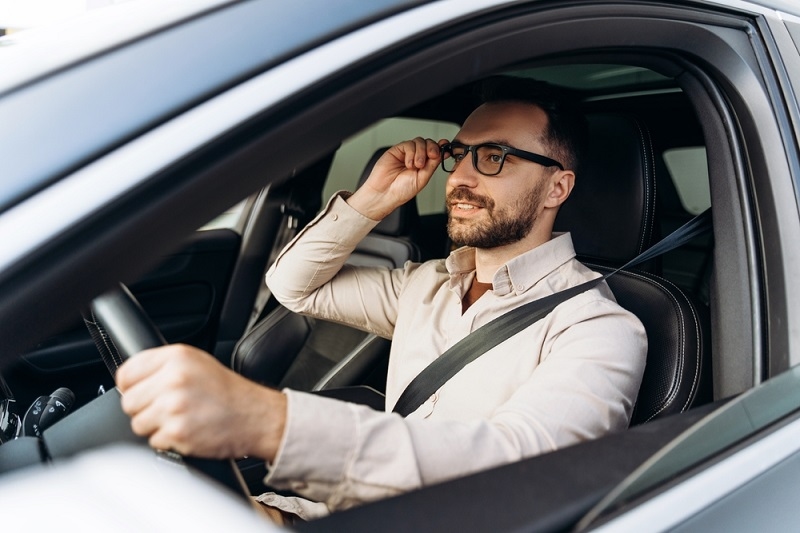
Wearing glasses while driving might seem like something from a movie about the future, but this idea is not so crazy anymore. Cars are getting smarter and smarter every year. Drivers are using maps, voice helpers, and traffic updates that tell them what is happening right now. The problem is not getting information anymore; it is something else. Smart glasses for driving are actually an interesting idea. Smart glasses can help people drive safely. The real challenge is accessing it without getting distracted.
Most of us have glanced at a dashboard screen for directions or checked a mounted phone while driving. Even those quick looks can pull attention away at the wrong moment. That is where smart glasses technology comes into the picture. What if you did not have to look down or to the side to get the information you need? Smart glasses technology can show you information right in front of you, so it feels like it is a natural part of what you are looking at. This means you can just look ahead and see the smart glasses' information you need. Smart glasses for driving aim to do exactly that. The concept is simple: fewer distractions, smoother awareness, and safer roads. But does it truly work that way in real life?
Before deciding whether this innovation makes sense, it helps to understand how smart glasses technology actually functions in a driving environment. At its core, the goal is not to overwhelm drivers with flashy visuals. It’s to quietly assist.
Smart glasses technology uses tiny built-in displays and sensors to project subtle information onto transparent lenses. When paired with a smartphone or vehicle system, the glasses can show navigation arrows, speed limits, or traffic warnings in real time. Instead of shifting focus between the road and a separate screen, drivers receive gentle prompts directly ahead.
The benefit isn’t about adding more data; it’s about reducing eye movement. Even small shifts in attention can delay reaction time. By keeping visual cues aligned with the road itself, smart glasses for driving attempt to make information feel like part of the environment rather than a separate task.
Course this only works if the design stays simple. Bright graphics, many things on the screen, or constant pop-ups could easily ruin it. The technology has to feel almost invisible, stepping in when it's really helpful.
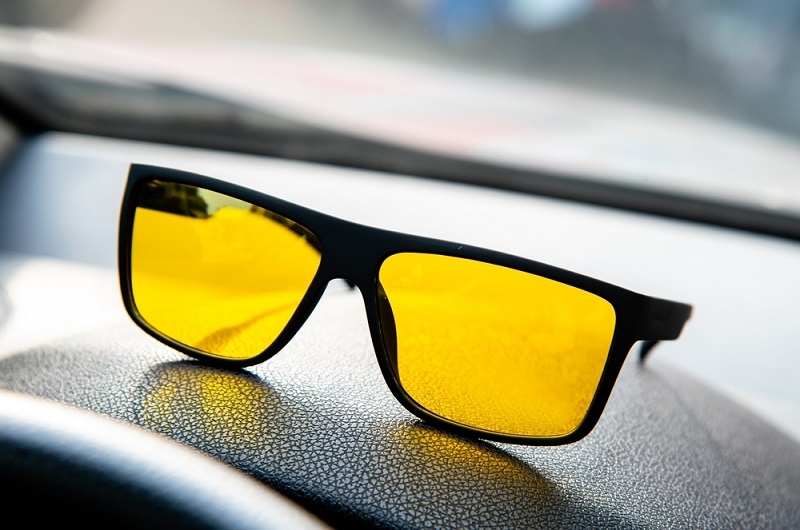
When people talk about using augmented reality glasses while driving, they always worry about safety. This is a thing to think about. Driving a car needs your attention. Augmented reality glasses work by adding computer-generated pictures to what you can see.
In theory, this can enhance awareness. For example, instead of hearing “turn left in 200 meters,” you might see a soft arrow aligned with the actual street. That alignment reduces the mental effort of translating instructions.
But augmented reality glasses must walk a fine line. Too many visual elements can increase cognitive strain. In heavy traffic or poor weather, even subtle distractions can matter. That’s why many experts believe AR smart glasses for driving should focus strictly on essential alerts—navigation, hazard warnings, and perhaps speed guidance, nothing more.
When designed with care, AR smart glasses help us form habits by cutting down on the need to look at other screens. If they have too many features, they can become just another thing fighting for our attention. To make a difference, AR smart glasses need to be simple and not try to do much. The key to AR smart glasses is simplicity. However, there is a distinct difference in AR and VR glasses.
Technology companies often present smart glasses with many exciting and futuristic features, but not all of them are useful while driving. Drivers do not need entertainment or flashy visuals on the road. What really matters are features that support safety, provide timely information, and reduce distractions. The most helpful smart glasses work quietly in the background, acting like a simple assistant that only gives information when it is needed. Smart Glasses Features That Matter While Driving:
Smart glasses that show directions at the right moment help drivers keep their eyes on the road instead of checking a phone or dashboard screen.
Live traffic alerts allow drivers to avoid congestion and choose better routes without needing to manually check maps.
Voice commands make it possible to ask for directions or respond to messages without taking your hands off the wheel.
Important alerts can appear automatically so drivers do not need to touch or adjust the device.
Some smart glasses adjust brightness based on lighting conditions, making them comfortable to use during both day and night.
Subtle warnings about road hazards or lane drifting can add an extra layer of safety without becoming distracting.
Looking ahead, the future of glass seems closely tied to the development of connected and semi-autonomous vehicles. As cars collect information about road conditions, traffic flow, and how people drive, smart glasses could serve as a personal extension of that data.
The future of glasses might involve alerts driven by artificial intelligence that warn about potential dangers before they happen. Smart glasses could highlight a pedestrian in light or signal sudden braking ahead faster than a person can react. These advancements would rely on improved glass technology that processes information quickly and shows it clearly. Comfort will also play a role in adoption. Lighter frames, longer battery life, and displays that are not noticeable will determine whether drivers see these devices as tools or extra gadgets.
While we may not see smart glasses fully replacing car dashboards soon, gradual improvements suggest they could become a helpful layer of driving assistance. The success of glasses for driving will depend on how well they fit into daily routines. Smart glasses will need to be a part of driving.
Know More: Wearable Technology: Next Big Thing in Health and Fitness
Smart glasses for driving are really cool because they change the way we think about being safe on the road and getting information. These smart glasses use technology and better systems to show us things while driving. They do this without making us look away from the road.
To make a difference, smart glasses need to be designed practically. They must also have rules that make sense. The main goal is to make driving safer with these glasses. They should help us stay focused on the road. If people keep making glasses for driving better than smart glasses, driving might just change how we drive without us even noticing. Smart glasses, for driving, could be a part of our future.
Rules vary depending on location. In many areas, devices are permitted as long as they do not obstruct vision or violate distracted driving regulations.
AR smart glasses place navigation cues directly in your field of vision, reducing the need to look at a dashboard display.
They can help if limited to essential alerts. Overuse of visual overlays may increase mental strain instead of reducing it.
It aims to deliver timely information within the driver’s natural line of sight, potentially improving reaction time.
Unlikely in the near term. They are more likely to complement existing systems rather than replace them entirely.
This content was created by AI