


Funding a growing enterprise with your private credit cards is a catastrophic financial mistake. Relying on personal limits exposes your personal assets and completely chokes your operational growth. You must build a highly tactical financial barrier to secure massive commercial capital. Establishing a pristine business credit score is the absolute mandatory survival strategy required to rapidly scale and dominate today.
Must Read: What is Machine Learning and How Does it Work in AI?
You can check below to understand the reality of business credit vs personal credit:
Your personal credit is permanently tied to your Social Security Number. If your company defaults on a loan that is backed by your personal profile, the bank will aggressively bypass the business and seize your private assets, your house, and your car. Corporate credit is tied exclusively to your Employer Identification Number (EIN).
Personal credit cards are severely restricted by consumer algorithms that actively penalize you for utilizing more than thirty percent of your available limit. Corporate credit operates in a completely different financial stratosphere. Banks routinely extend business lines of credit ten to one hundred times larger than personal limits because they fully expect companies to carry heavy, revolving operational debt to fuel aggressive inventory acquisition and expansion.
Top Pick: Top Tech Innovations That Will Change Businesses Forever
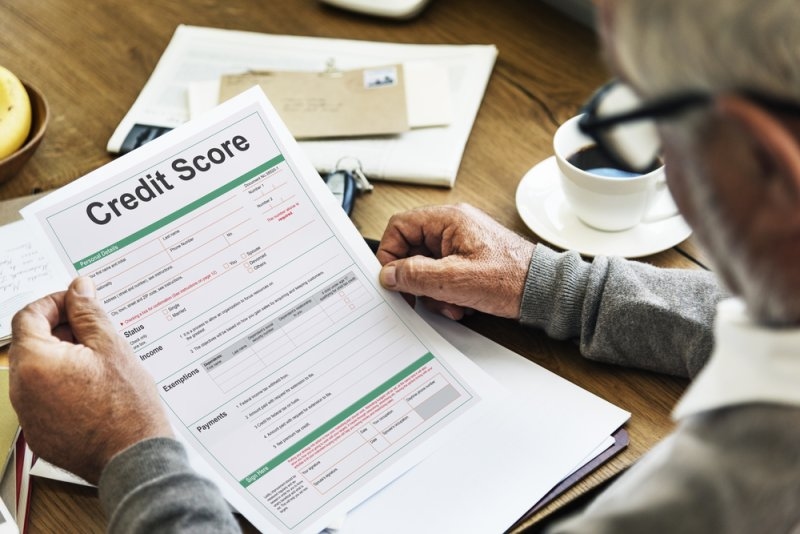
You cannot win the financial game if you do not understand how the commercial scoreboard actually works. Unlike your streamlined personal FICO score, corporate scoring models are highly fragmented. If you are asking what a good business credit score is, you have to independently analyze the specific reporting bureaus dictating your financial reputation.
This is the absolute heavyweight champion of corporate credit assessment. The PAYDEX score ranges from zero to one hundred. Anything sitting below an eighty is a massive red flag to tier-one suppliers. To hit the elite tier, you cannot just pay your bills exactly on time; you must pay them aggressively early.
Equifax does not just look at your daily payment history; they actively hunt for catastrophic public records that signal operational distress. Their system grades your company on a strict scale up to one hundred, heavily factoring in past commercial liens, corporate bankruptcies, and legal judgments. A score above ninety mathematically proves to commercial lenders that your operational history is perfectly clean and devoid of hidden legal liabilities.
Experian utilizes a highly aggressive, forward-looking predictive algorithm. They rank your entity from one to one hundred, explicitly calculating the exact mathematical probability of your company defaulting on its debt within the next twelve months.
You need to check the following list to understand how to build business credit:
You must completely divorce yourself from the dangerous sole proprietorship trap. Incorporate immediately as an LLC or an S-Corp, secure your federal EIN, and open a dedicated commercial bank account.
Dun & Bradstreet will not track your company automatically. You must proactively register your business in their database and secure a mandatory Data Universal Numbering System (DUNS) number. Without this specific nine-digit identifier, your commercial payment history essentially does not exist in the eyes of major international suppliers.
You need instant payment data to trigger the algorithms. Open accounts with tier-one commercial suppliers like Uline, Quill, or Grainger that offer net-30 billing terms. Buy your basic operational supplies on credit, wait exactly one week, and pay the invoice in full. Do this aggressively and repeatedly.
You can improve your business credit fast with the following steps:
Do not let your daily operational expenses go to waste. Use a third-party corporate reporting service to manually push your utility bills, commercial lease payments, and business internet bills directly into the credit bureaus' databases.
Commercial algorithms aggressively punish high debt ratios. If your business credit cards are entirely maxed out, you are hemorrhaging critical points every single day. You must immediately divert all available liquid capital to smash those revolving balances down below twenty percent of the total limit before the next monthly billing cycle closes.
The commercial bureaus make massive, catastrophic errors constantly. They will routinely mix your file with a failing company that shares a similar name or address. You must pull your commercial reports quarterly and ruthlessly dispute any late payments or derogatory marks that do not legally belong to you.
You can maximize the benefits of business credit cards by using the following methods:
Premium commercial cards routinely offer staggering cash-back or travel point bonuses simply for hitting initial spending requirements. If you time your major equipment purchases or quarterly inventory orders perfectly, you can instantly claw back thousands of dollars in raw capital just for routing the necessary money through the right piece of plastic.
Elite corporate cards offer a highly tactical 0% introductory APR for 12 to 18 months. This is effectively a massive and unsecured free loan from the bank. You can use this completely free capital to aggressively fund marketing campaigns to generate massive revenue.
When you buy expensive operational hardware with a premium corporate card, you instantly lock in extended warranties, massive purchase protection against theft, and severe travel insurance for your sales team.
The era of bootstrapping your company with limited personal funds is completely over. If you want to survive the brutal realities of modern commerce, you must treat your corporate financial identity like a highly guarded military asset. You cannot afford to operate without a massive financial safety net.
Unlike personal consumer reports that typically refresh on a strict monthly cycle, corporate profiles update on a heavily fragmented and continuous timeline. Commercial bureaus constantly process incoming data streams from thousands of vendors.
Relocating a physical office does not inherently damage the financial rating. However, if the administrative update is not meticulously reported to all three major commercial bureaus simultaneously, the system can easily fragment the company's data file.
Corporate financial data is not heavily regulated by standard consumer protection laws, allowing the major bureaus to completely monopolize and gatekeep the information. Commercial lending involves massive financial risk. Therefore, banks and tier-one suppliers are forced to pay exorbitant subscription fees to access these proprietary algorithms to accurately predict corporate bankruptcy rates.
This content was created by AI